https://georgegershwin.bluemusicgroup.com
 Live at Hubbard Hall
 At the Vanguard
 Tony Bennett Swings with Count...
 Easy Like Music to Listen to
 The Art of Tatum Vol 2
 Oscar Peterson Plays & Sings
 Live Sessions 1953
 Funky Blues
 Early Years
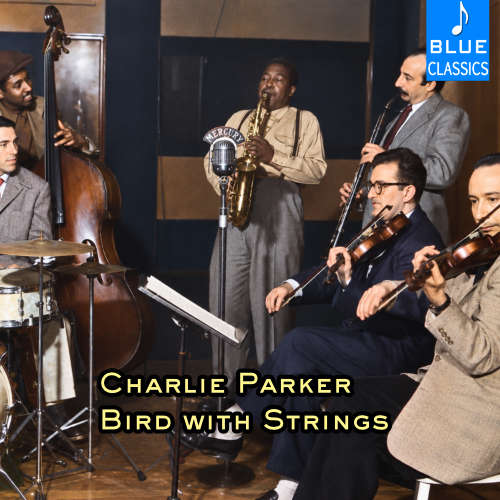 Bird with Strings
 Erroll Garner in the 1940s Vol 2
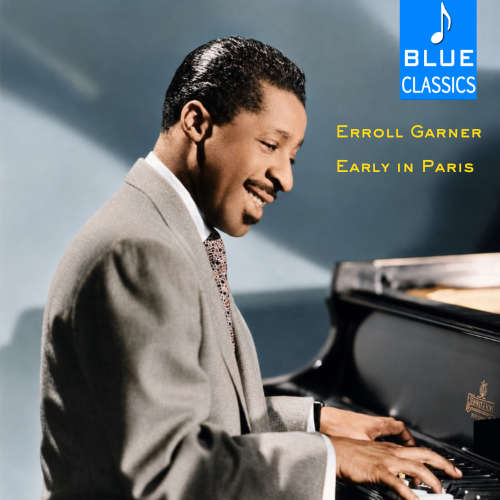 Early in Paris
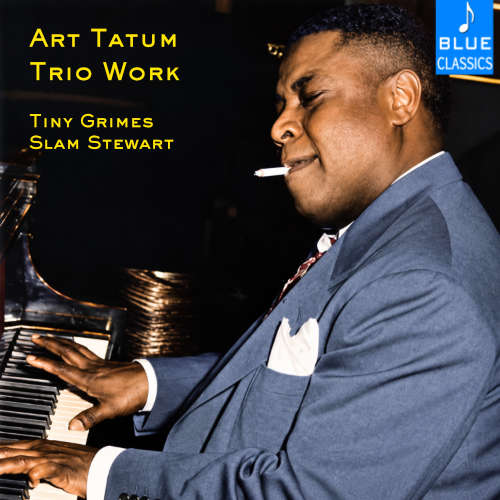 Trio Work
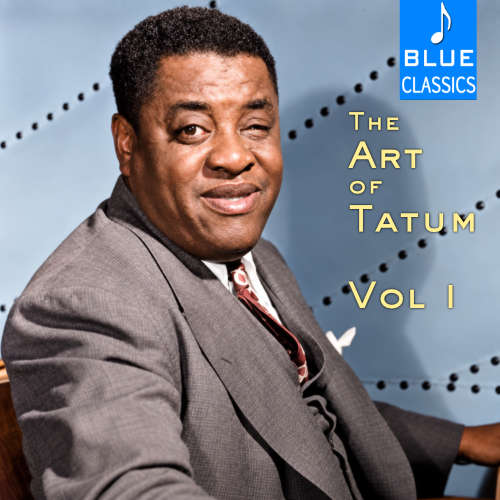 The Art of Tatum Vol 1

George Gershwin - composer
George Gershwin (b. September 26, 1898 – d. July 11, 1937) was an American composer and pianist whose work brought together several musical worlds that had previously been treated as separate: Broadway and the concert hall, popular song and symphonic composition, jazz and European concert music. During a career that lasted barely two decades, he became one of the most successful American composers of his generation. His music included songs that entered the standard repertoire of popular music, Broadway musicals, orchestral works, piano compositions, and the opera Porgy and Bess.Gershwin was born Jacob Gershovitz on September 26, 1898, in Brooklyn, New York, the second son of Morris and Rose Gershovitz, Russian-Jewish immigrants who had settled in New York. His older brother Ira Gershwin, born Israel Gershovitz in 1896, would eventually become his principal lyricist. The family lived in New York's Lower East Side, and George grew up in an environment in which music was not initially expected to become his profession.
George's interest in the piano became apparent at an early age. According to the Gershwin family's own biographical account, he was not an especially studious child, and it surprised his family that he had been teaching himself to play the piano. His musical talent quickly became apparent, however, and by his teenage years he was looking for ways to make music his profession.
In 1914, at the age of fifteen, Gershwin left high school and began working on Tin Pan Alley as a song plugger. This was a practical apprenticeship in the commercial music industry: song pluggers demonstrated newly published songs to performers and customers, and the work gave Gershwin direct contact with the songwriting business. It also provided him with an opportunity to study the methods of professional composers and arrangers.
His first published song, When You Want ’Em, You Can’t Get ’Em, When You’ve Got ’Em, You Don’t Want ’Em, appeared in 1916. It attracted little attention, but Gershwin continued writing songs. His breakthrough came with “Swanee,” with lyrics by Irving Caesar. Al Jolson incorporated the song into his performances, and in 1919 it became Gershwin's first major popular success. The success of Swanee established him as a commercially successful songwriter while he was still in his early twenties.
During these years Gershwin was also looking beyond popular songwriting. He wanted to become a serious composer and increasingly sought to improve his knowledge of musical composition. His studies with Charles Hambitzer, a New York pianist and teacher, were important to his development as a pianist. In 1923, he studied musical form and composition with Rubin Goldmark, although the Library of Congress finding aid notes that most sources indicate that this formal study lasted only three lessons.
Gershwin's professional relationship with Ira became increasingly important during the first half of the 1920s. Although George and Ira had worked together earlier, 1924 marked the beginning of their sustained partnership as a songwriting team. Their first major Broadway collaboration was Lady, Be Good!, which opened in December 1924. The brothers developed a working method in which George's melodies and Ira's lyrics were closely fitted to one another. Their partnership would produce a succession of successful musicals over the next decade.
The year 1924 also changed Gershwin's position in American music through Rhapsody in Blue. Bandleader Paul Whiteman had announced a concert of modern music to be held at Aeolian Hall in New York on February 12, 1924. Gershwin was asked to contribute a new work. The project came at a difficult time for him because he was simultaneously working on a Broadway musical, but he completed the composition in less than three weeks. Ferde Grofé orchestrated the work for Whiteman's ensemble.
Rhapsody in Blue was premiered with Gershwin himself at the piano and Whiteman conducting. The concert was presented as an “experiment in modern music.” The work combined elements associated with jazz and popular music with a concert presentation, and its first performance immediately attracted public attention. The Library of Congress describes it as a decisive work in the history of American music.
The success of Rhapsody in Blue did not simply make Gershwin a more prominent songwriter. It established a new dimension to his career. He now had a public identity as both a popular composer and a composer of concert music. He continued to write Broadway scores while developing works intended for the concert hall.
The following years brought a steady series of successful musicals. Gershwin and Ira collaborated on Oh, Kay! in 1926, Funny Face in 1927, Strike Up the Band, Girl Crazy in 1930, and Of Thee I Sing in 1931. The Library of Congress notes that Of Thee I Sing became the first musical comedy to win the Pulitzer Prize for Drama. The Gershwins' work combined dance numbers, romantic songs, comic material, and orchestral writing in ways that helped redefine Broadway musical theatre during the Jazz Age.
Gershwin continued to work as a pianist throughout this period. He made recordings of his own compositions and piano arrangements, including Rhapsody in Blue and his three Preludes. The Library of Congress notes that he made relatively few commercial recordings after 1928, although radio broadcasts from the 1930s preserve evidence of his later piano playing.
In 1925, Gershwin took another substantial step toward the concert hall with his Piano Concerto in F. The work received its premiere at Carnegie Hall on December 3, 1925, performed by Gershwin as soloist with the New York Symphony Society under Walter Damrosch. Unlike Rhapsody in Blue, which had been orchestrated by Grofé, Gershwin orchestrated the Concerto in F himself. This was an important stage in his development as a composer, demonstrating that he was increasingly able to handle large-scale orchestration as well as popular songwriting.
The Concerto in F was followed by further orchestral works. Gershwin's growing ambition was to establish a personal American concert style that could incorporate jazz without simply reproducing the conventions of jazz performance. His music was therefore not an attempt to make classical music imitate a jazz band; instead, he sought to integrate rhythms, harmonies, sonorities, and melodic procedures associated with American popular music into larger forms.
In 1928, Gershwin travelled to Europe and spent time in Paris. This visit provided the immediate background for An American in Paris. While in Paris he encountered composers and musicians including Maurice Ravel and Nadia Boulanger, and he explored the European musical environment. Gershwin was interested in studying with established composers, but several of them declined to take him as a formal student. The reasons differed, but the episode reflected Gershwin's status as a musician who had already developed a strong individual voice outside the academic European tradition.
An American in Paris was completed after his return to the United States and premiered in New York in December 1928 with Walter Damrosch conducting. The work used orchestral color to evoke an American composer's experience of Paris and incorporated elements of the blues and jazz vocabulary. The Library of Congress places it alongside Rhapsody in Blue and the Concerto in F as part of Gershwin's successful movement between popular and concert music.
Gershwin's work for the stage continued at the same time. Girl Crazy, premiered in 1930, produced songs that became part of the standard popular repertoire, while the political satire Of Thee I Sing demonstrated the increasing sophistication of the Gershwins' Broadway work. Ira's lyrics could be witty and conversational, while George's melodies combined directness with increasingly complex harmonic writing.
The relationship between George and Ira was central to this process. Ira generally worked from George's completed musical ideas, constructing lyrics that followed the rhythm and contour of the melodies. Their collaboration was unusual in its consistency and longevity, and the Library of Congress collection contains manuscripts, lyric sheets, sketches, correspondence, business papers, photographs, and other materials that document how extensive their working relationship was.
In the early 1930s, Gershwin's career expanded further into Hollywood. He wrote music for films including Delicious and later Shall We Dance and A Damsel in Distress. The Hollywood work allowed him to continue writing songs while also experimenting with larger musical forms and orchestration.
One of his most ambitious projects was Porgy and Bess. The work grew from DuBose Heyward's 1925 novel Porgy and the later stage play by DuBose and Dorothy Heyward. In February 1934, George and Ira Gershwin began collaborating with DuBose Heyward on the work that became the opera. Gershwin subsequently spent considerable time developing the musical material and preparing the orchestration.
Gershwin's manuscript for Porgy and Bess ultimately extended to hundreds of pages. He worked on the orchestral score from September 1934 to September 1935, and on September 2, 1935, he signed the completed orchestral score. The Library of Congress describes the work as a major part of the American operatic tradition, while its collection contains the sketches, full score, vocal materials, and other documents associated with the project.
The premiere of Porgy and Bess took place in Boston in September 1935, followed by its New York opening in October. Gershwin's score incorporated elements of blues, jazz, spirituals, popular song, and operatic technique. The music included what would become some of his most frequently performed compositions, among them “Summertime,” “It Ain't Necessarily So,” and “I Got Plenty o' Nuttin'.” The Library of Congress notes that the opera eventually became part of the international operatic repertory while its songs also entered popular and jazz repertoire.
The success of Porgy and Bess coincided with a remarkable level of professional activity. By the middle of the 1930s, Gershwin had become one of the most successful American composers of his generation. The Library of Congress estimates that by the age of thirty-seven he had written the scores for twenty Broadway musicals and two London productions, in addition to his concert works and Porgy and Bess.
Gershwin's interests extended beyond composition. He was a serious pianist and spent considerable time improvising at the keyboard. His improvisations sometimes became sources for later compositions, and his ability to create music spontaneously was an important element of his artistic identity. Contemporary and later accounts have noted that some of his piano performances were not completely written out beforehand, which could create difficulties when trying to reconstruct exactly what he had played. The surviving manuscripts in the Gershwin Collection provide substantial evidence of the composer's process, including sketches and working materials rather than only finished scores.
He also painted and drew, and photographs from his later years show an active social and professional life. He maintained friendships with musicians, writers, performers, artists, and other figures in American cultural life. His growing fame brought him considerable financial success, although he continued to work intensively throughout the 1930s.
In 1937, Gershwin moved to Hollywood to work on the score for The Goldwyn Follies. During this period he began experiencing severe headaches and neurological symptoms. He was diagnosed with a brain tumour, and despite medical treatment his condition deteriorated rapidly.
George Gershwin died in Los Angeles on July 11, 1937, aged only 38. His death came while he was still working on The Goldwyn Follies. The Gershwin family's official history notes that he was not quite 39 years old when he died.
His death ended a career that had developed exceptionally rapidly. In little more than twenty years, Gershwin had progressed from Tin Pan Alley song plugger to a composer whose works were performed in Broadway theatres, concert halls, cinemas, and opera houses. His music had crossed boundaries between commercial and concert traditions without abandoning either.
The documentary record of Gershwin's career is unusually extensive. The George and Ira Gershwin Collection at the Library of Congress contains musical manuscripts, sketches, printed music, lyric sheets, correspondence, photographs, business papers, legal documents, programs, scrapbooks, and other materials. The collection provides evidence not only of the finished compositions but also of the working processes behind them.
Among Gershwin's major works, Rhapsody in Blue, Concerto in F, An American in Paris, and Porgy and Bess are particularly representative of his effort to create a musical language that could accommodate both American popular music and concert traditions. His Broadway and Hollywood songs, meanwhile, became a substantial part of the standard repertoire for singers and jazz musicians.
His music has continued to be performed long after his death. The Gershwin Collection's manuscripts remain an important source for performers and scholars, while his songs continue to appear in concert programmes, recordings, films, musicals, and jazz interpretations. The Library of Congress has described its Gershwin holdings as a uniquely comprehensive documentary record of the brothers' lives and work.
Gershwin's influence is therefore not confined to one musical category. He was simultaneously a songwriter, pianist, Broadway composer, concert composer, and opera composer. His career demonstrated that American popular music and European concert traditions could exist within the same compositional language. His work remains closely connected with the musical culture of twentieth-century America, while the surviving manuscripts and recordings continue to document the development of that music in unusually direct form.
Selected sources: Library of Congress, George and Ira Gershwin Collection and Gershwin exhibitions; George and Ira Gershwin official website and timeline; Smithsonian/Library of Congress materials on Rhapsody in Blue and Porgy and Bess; Howard Pollack, George Gershwin: His Life and Work (University of California Press, 2006).